
Ed Moses' work has been with me since SJ suggested he was an interesting artist for me to look at. It has led me to the following observations:
My studio practice might need to be structured around a methodology of duality—a necessary coexistence where two opposing conditions are not merely tolerated but are actively sought as simultaneous truths. This approach provides the restless energy for my making. I can no longer work on one truth. Ed Moses has inspired me in this.
I want to establish two distinct starting points, permitting an oscillation between the known image and the pure action, much like Moses shuttled between reference and non-reference:
-
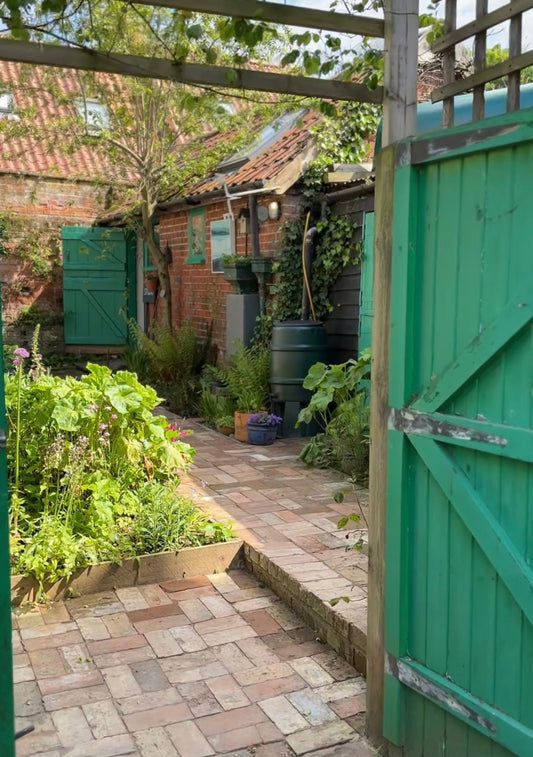
Reference: I engage with specific, emotionally weighted sites. Taken fromt he walk and draw activities. This involves deriving visual data from the beach walk and the images documented at the murders shed river space. These are the material anchors—the formal developments that ground the work in tangible experience, whether through photographs or preliminary sketches.
-
Process: This operates entirely in the absence of a discernible pictorial source. The creative laboratory.
Reference based Lexicon.
I want to work from these 2 sets of photographs and the sound bite.


The Serra Protocol and My Operational Lexicon
The foundation for the process starting point is the work of Richard Serra. His Verb List (1967–68) serves as a concise manifesto, shifting the focus from the finished object (the noun) to the pure action of making (the verb). Serra's intent, epitomised by his statement, "Drawing is a verb," was to establish a protocol for "actions to relate to oneself, material, place, and process" (Serra, 1967–68). The list of infinitives—such as to roll, to fold, to drop—created a set of conditions designed to reduce the artistic process to "pure process and activity."
In alignment with this Serra reference, I have explored a set of actions—an instruction manual for the self—to establish the physical parameters of discovery:
-
To cut line, to cut shape, to combine, to juxtapose, to print, to repeat, to draw line, to draw shape, to flow, to drop, to burn, to find, to fold, to remove, to add, to position, to stick, to peel, to respond, to stain, to scrub, to wipe, to scratch.
These actions are designed to subvert premeditated form, ensuring the technical account of "what happened" in the studio is one defined by material spontaneity.
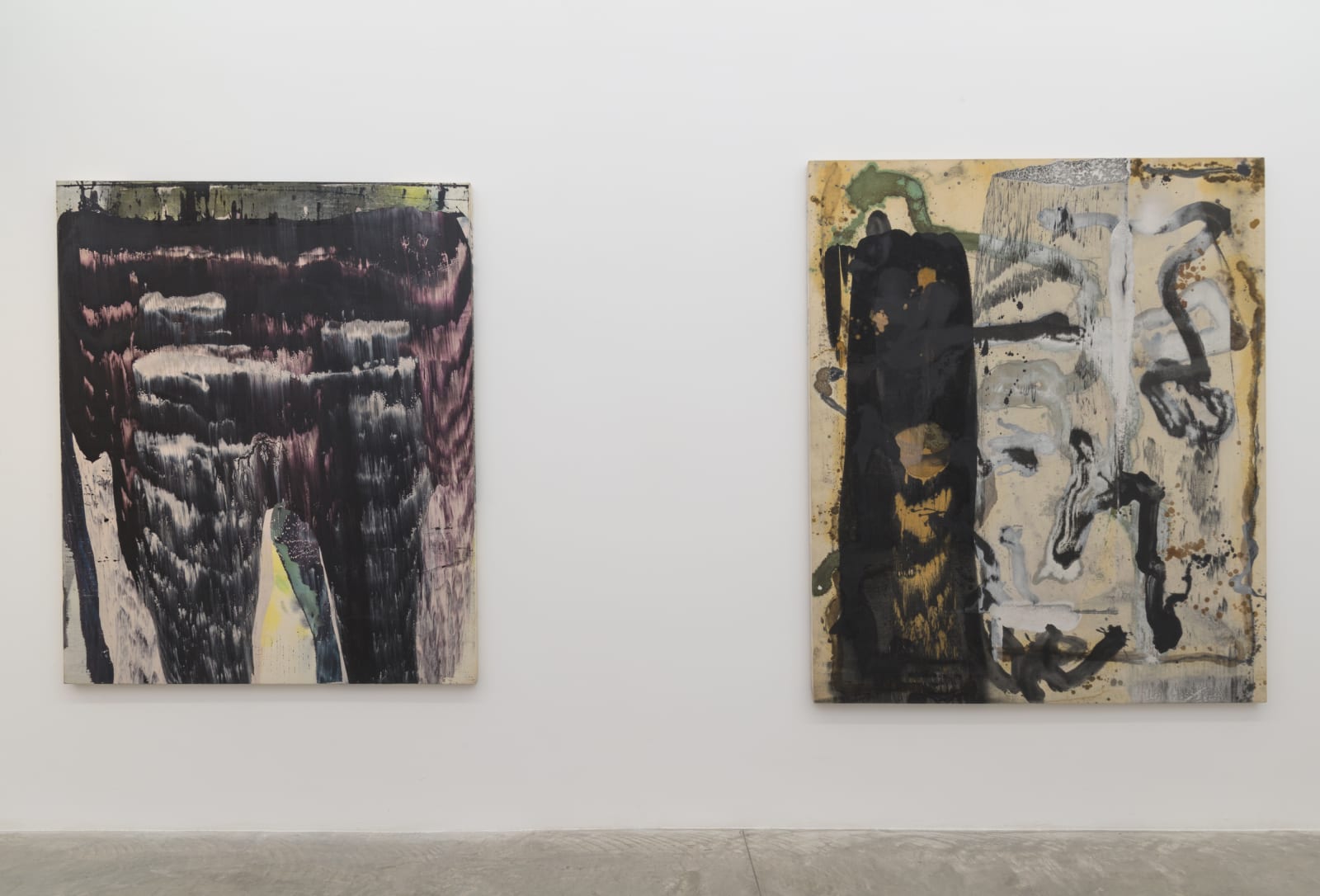
Ed Moses: Painting as Process (installation view). 2016. Albertz Benda, New York.
Expanding:
The operational method connects the isolated studio act to wider contexts. The pursuit of the indeterminate in painting necessarily incurs an existential tremor, one which II am definitely feeling and which Ed Moses articulated as the feeling of being engaged in "scary things because the hour of the wolf is when that comes out... this terror" (Moses, 2012). Maybe I strive for that state, because the fear is tethered to the creative potential of the unbounded. Maybe this is more important than I considered.
'flow'. backwards is 'wolf'. 'to drop' is pordot
Is this engagement with the phenomenal world paramount? Maybe. The artistic process often risks collapsing into a sterile self-gazing, a private act rendered pointless unless it can successfully breach the studio walls. Moses’s crucial drive to "get back into the phenomenal world" (Moses, 2012) clarifies the task: the work must function as a phenomenological aperture. It must transition from being a personal struggle to an experience that is importantly witnessed within the Lebenswelt (life world). [Husserl]
This process demands a deliberate dance with chaos. Moses’s career exemplifies the push towards accident and the risk of "disorder and incoherence." The generative power lies in the subsequent, crucial stage: the reclamation. The spontaneous mark must be disciplined and resolved through a critical process of adjustments. It is this necessary labour of adjustment that translates raw gesture into an intelligible, communicative structure.
Materialising:
The coherent statement of this practice lies in its commitment to a restless and peripatetic exploration, continually shuttling back and forth between themes and practices. My work is defined by the oscillation between the structured memory of the image and the physical chaos of the verb.
Defining Question: How can the actional vocabulary (the Verb List) and the images references work together or are these separate divergent starnds which never cross.
The ultimate purpose is the preservation of spontaneity. My function as a maker is to make work that transcends the initial source material and expresses something with a sense of indeterminacy/ hybridity perhaps. I am not documenting an image; I am documenting the fact that the two truths of action and reference can be materially conflated to create a singular, witnessed instance of being.Reference List
Moses, E. (2012) TEDxEastHampton - Ed Moses on his art. [Online video]. TEDx Talks. Available at: https://www.youtube.com/watch?v=LeDurYNh1yY (Accessed: 13 November 2025).
Serra, R. (1967–68) Verb List. [Drawing, Pencil on two sheets of paper]. Museum of Modern Art, New York.